You want a power bank that’ll keep your devices alive from morning to bedtime, no outlet-hunting required. This list highlights 12 trusted portable chargers with high capacity, fast charging, and travel-friendly touches to keep your phone, tablet, or laptop powered up all day.
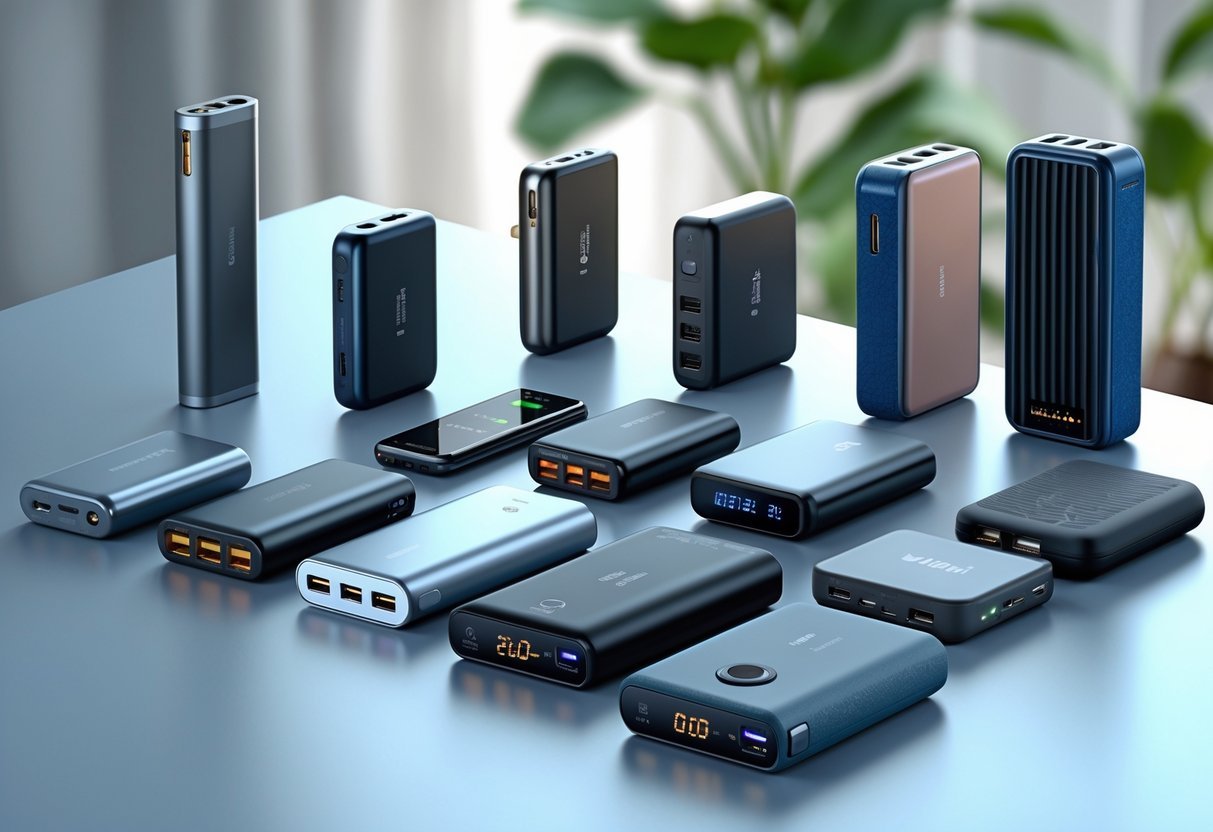
You’ll see options for every kind of traveler here—from pocket-sized units to beefy packs that handle all your gadgets. There are notes on battery size, charging speed, ports, safety, and what makes each one a clever pick for work trips, flights, or marathon days out.
Use this guide to find a travel battery pack that fits your devices and habits, so you can stop stressing about dying batteries and focus on what actually matters while you’re out and about.
Best 12 Portable Chargers and Power Banks for Long Travel Days
These picks are all about long runtimes, quick charging, and portable designs. Some even toss in wireless or magnetic features, so you can keep your phone, tablet, or laptop juiced up on the go.
Top High-Capacity Portable Chargers and Power Banks
High-capacity banks are for folks who need multiple charges with no outlet in sight. If you want to recharge your phone a few times or top up a tablet or small laptop, look at 20,000 mAh or more.
Most 20,000 mAh models now include USB-C PD at 45–100W for speedy charging and pass-through so you can refill the bank while it powers your device. That’s pretty handy, honestly.
If you care about weight, 10,000 mAh banks are lighter and still give you one or two full phone charges. Anker and Biolite (the Charge 80 is great for more capacity) are reliable, and they build in safety features like overheat and short-circuit protection.
Just make sure to check the size and airline rules if you’re flying with a high-capacity battery—those limits sneak up on you.
Fast Charging and Quick Charge Solutions
Fast charging is a lifesaver when you’ve only got a short layover or a quick coffee stop. Look for banks with USB-C Power Delivery (PD) and Qualcomm Quick Charge if your phone supports it.
A charger with 45–65W PD will fast-charge most laptops and refill a phone in no time. Multiple output ports mean you can juice two devices at once without losing speed.
Some compact banks pair a high-watt USB-C port with a USB-A Quick Charge port. Labels like “PD 60W” or “QC 3.0” are what you want—skip the vague mAh-only stuff if speed matters to you.
Top Travel-Friendly and Compact Designs
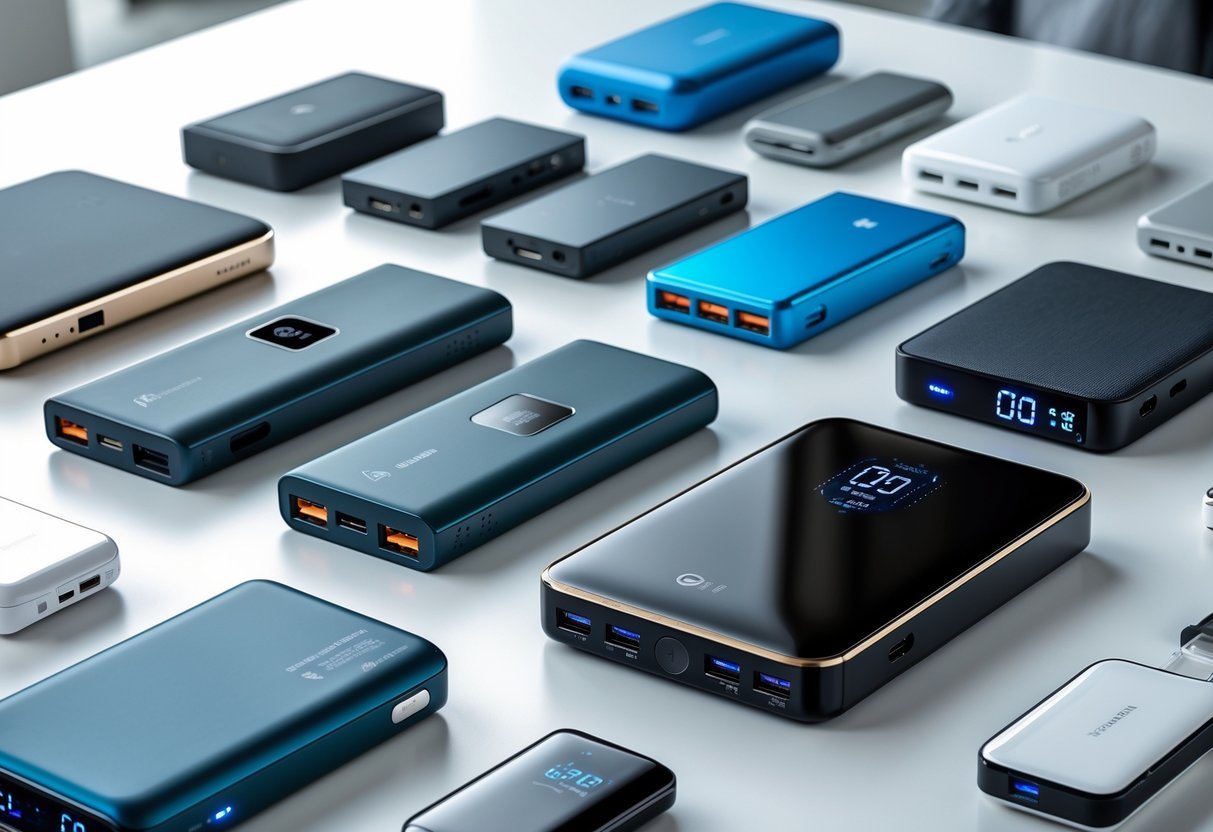
Travel-friendly banks get the balance right between size, weight, and power. A real compact power bank fits in a pocket or tiny bag but still packs 10,000–15,000 mAh.
Look for slim builds with built-in cables or foldable plugs—less cable chaos. Durable shells and rounded corners make these easier to toss into your bag without a second thought.
Anker’s PowerCore line and other “nano” or “compact” models are worth checking out. It’s nice when there’s a clear charge-level indicator and a tethered cable so you don’t lose anything important mid-trip.
Wireless and Magnetic Charging Power Banks
Wireless charging is all about convenience—just set your phone down and go. Pick banks that handle Qi wireless charging at 7.5–15W, which works for iPhones and most Androids.
If you’ve got an iPhone with MagSafe, a magnetic wireless bank keeps things lined up and charging steady. MagSafe-compatible or “magnetic wireless” banks stick right to your phone for easy, hands-free power.
You’ll get slightly slower charging than with a cable, but it’s so much easier when you’re moving. If you want both, grab a hybrid bank with wireless and USB-C PD for fast wired top-ups too.
Critical Features to Look for When Choosing Power Banks for Travel
Pick a power bank that fits your devices, your trip, and your bag. Focus on capacity, charging speed, ports, cables, and safety features so you’re not left scrambling for power.
Battery Capacity and Number of Charges
Battery capacity is measured in mAh. For most phones, 10,000–20,000 mAh will get you 2–4 full charges—plenty for a weekend or a couple of long days.
If you’re packing a laptop or heading out for longer, go for 26,000–30,000 mAh or more. Just remember, usable capacity is always less than the number on the box because of voltage conversion and efficiency loss.
A 20,000 mAh pack usually gives you about 12,000–14,000 mAh for USB devices. Check your device battery size and do a quick division to estimate how many charges you’ll actually get.
Don’t forget about weight and size. Bigger batteries are heavier, and airlines have rules—most let you bring up to 100 Wh without special approval. Anything higher needs a green light from the airline, or it’s not coming aboard.
Fast Charging, Pass-Through, and Multiple Device Support
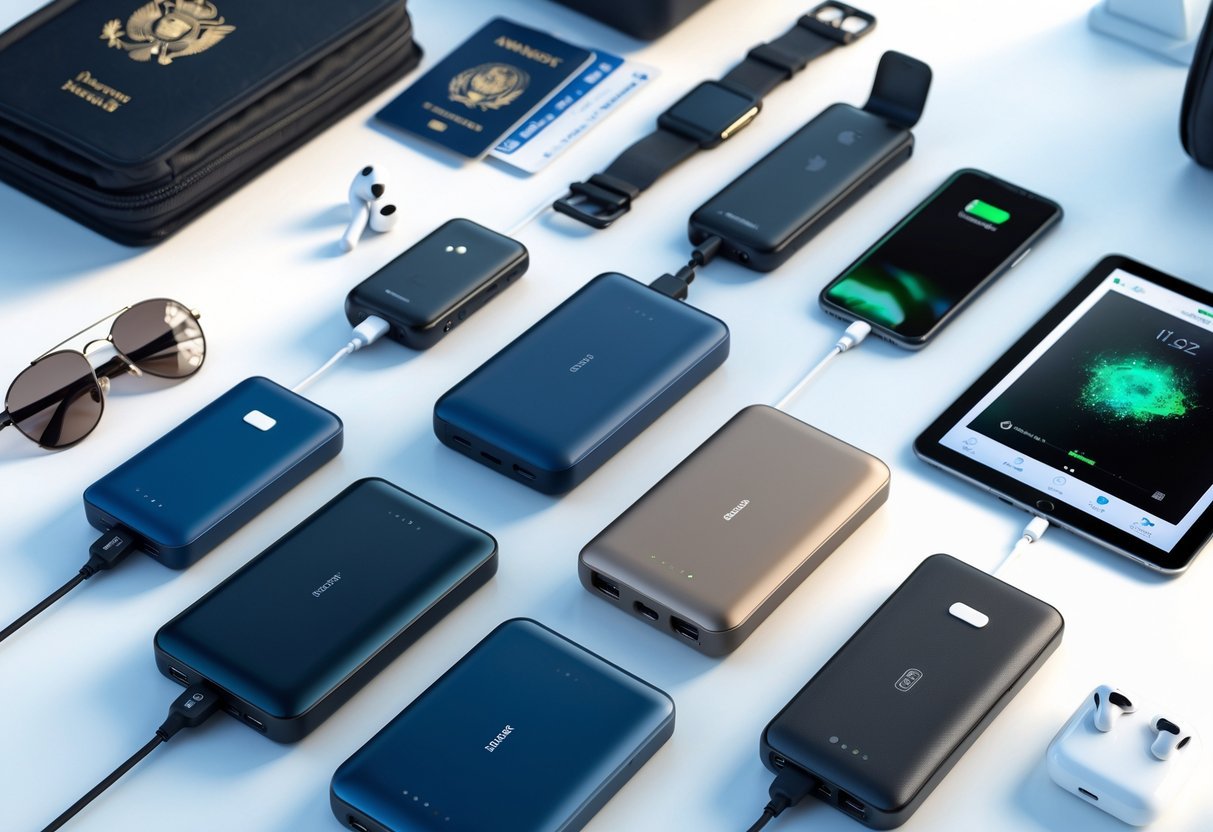
Fast charging means less downtime. Look for USB-C PD and labels like 30W or higher for laptops and quick phone fills.
PD at 30W or 60W handles most ultrabooks, while 20W+ is fine for phones. Quick Charge and PPS are nice for certain phones if you want the fastest charge possible.
If you’re charging more than one device, make sure your bank supports simultaneous output without slowing down. Some models offer dual USB or a mix of USB-A and USB-C, so you can run a phone and tablet together.
Pass-through charging lets you charge the pack and your device at the same time. It’s handy, but not all banks do it safely. Always check the manufacturer’s notes—sometimes it slows things down or makes the bank run hot.
Port Selection, Built-In and included Charging Cables
Match the ports to your devices. A good travel pack should have at least one USB-C PD and one USB-A port. USB-C is for high-watt charging and newer cables, while USB-A keeps your old stuff working.
Built-in cables are a real bonus when you’re packing light. Just make sure they’re sturdy and can lock in place if you’re tossing the bank in a bag. Nothing’s worse than broken cables on the road.
Also, check output wattage per port. Some banks say 60W total but split it to 30W each when two devices are plugged in. Read the fine print so you know what you’re getting.
It’s smart to keep a short USB-C to USB-C and a USB-C to Lightning cable in your kit for cross-device support. Better safe than sorry.
So, whether you’re a frequent flyer, a digital nomad, or just want peace of mind on a road trip, picking the right portable charger makes a world of difference. Don’t settle for a battery that leaves you hanging halfway through your day—invest in one that matches your real needs, and you’ll wonder how you ever traveled without it.
Safety, Durability, and Airline Regulations
Safety features are a must to prevent damage. You’ll want overcharge protection, overcurrent protection, temperature control, and short-circuit protection.
Certifications like USB-IF, UL, or CE? They’re not just for show—they actually give you some peace of mind.
Durability’s big, especially if you’re always on the move. Grab a pack with a tough shell and solid build quality.
Water resistance and shock resistance can be lifesavers if you’re outdoors or just a bit clumsy (hey, it happens).
Flying? Don’t forget to check the pack’s Wh rating and your airline’s specific rules.
Most packs under 100 Wh are fine for carry-on. If it’s between 100 and 160 Wh, you’ll probably need airline approval.
Anything above 160 Wh—yeah, that’s usually a no-go. Always keep your power bank in your carry-on, not checked luggage, since that’s what safety rules require.
Honestly, it can feel like a lot to remember, but a little prep goes a long way. In the end, picking the right pack means less stress and more time enjoying your trip—totally worth it, if you ask me.